Setting up an automated client intake flow across SMS and email
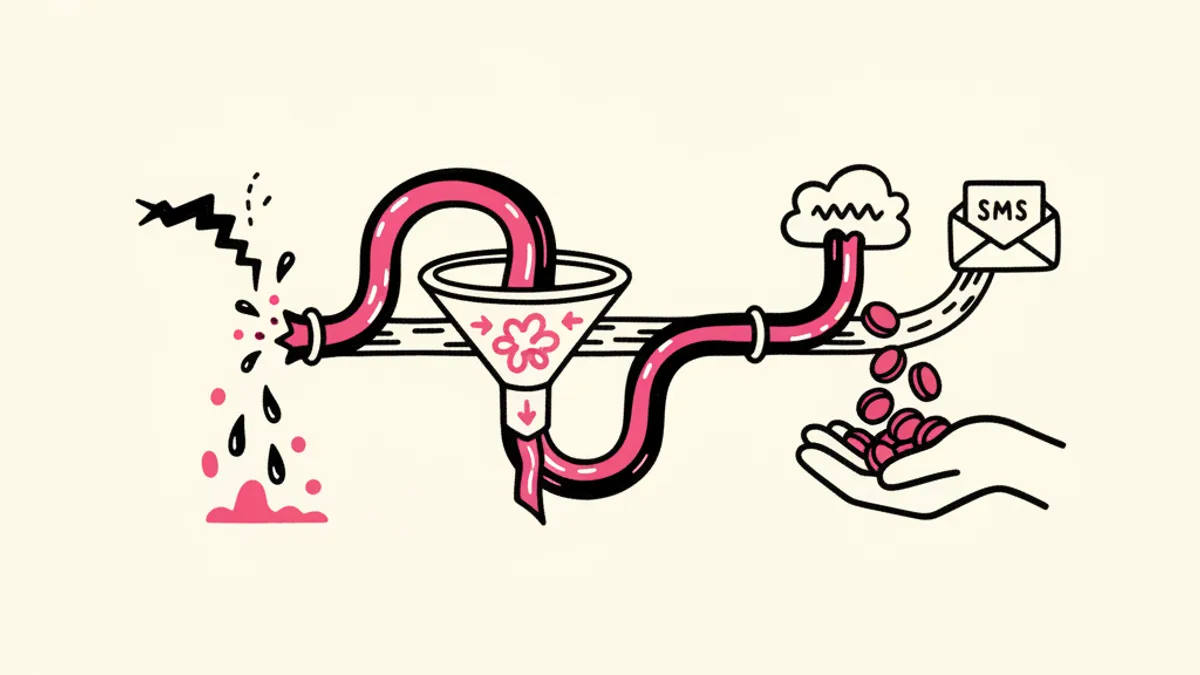
A new lead texts your business line at 6:45 pm on a Thursday asking for a project quote. Ten minutes later, another prospect fills out the contact form on your website with a similar request. By Friday morning, you are digging through two different inboxes trying to piece together who needs what. This fragmentation is the reality for most founders. You end up manually copying phone numbers from a text thread into your customer database while trying to eat lunch. It is tedious work that steals time from actual client delivery. Building an automated client intake flow across SMS and email stops this operational bleed. It centralizes incoming requests so you never drop a conversation just because you were away from your desk.
why disjointed customer communication channels leak business pipeline revenue
The sheer volume of unstructured communication is overwhelming for a small team. The problem is not that you lack inbound leads. The problem is that your intake process relies on your personal ability to remember who said what and on which platform. When you rely on memory and manual data entry, you inevitably drop the ball. A prospect texts you while you are driving to a site visit. You read it at a red light, mentally tell yourself to reply later, and completely forget about it by the time you get back to the office. That is a lost deal caused entirely by a lack of operational infrastructure.
We see this specific bottleneck frequently when operators try managing customer WhatsApp inquiries for local pharmacy owners or handling direct texts for professional services. They attempt manual methods for syncing whatsapp messages with crm data by copying and pasting text blocks at the end of the day. This manual syncing creates a massive delay between the customer reaching out and the business actually logging the interaction. During that delay, the lead goes cold. Consumers today expect near instant acknowledgment. If they send an SMS and do not get a reply for six hours, they assume you are too busy to take their money and move on to the next provider on their list.
Every disjointed channel acts like a hole in your sales bucket. You spend marketing dollars to generate attention, but the operational friction of capturing that attention causes the revenue to leak out. Effective small business customer intake automation seals these holes. It centralizes the chaos into a single, reliable pipeline. You stop logging into four different applications just to see if a new prospect has replied. You stop asking prospects to repeat information they already texted you just because you moved the conversation to an email thread. A unified system captures the intent immediately, regardless of the medium the customer chose to use.
mapping initial customer inquiries to structured profiles in your customer database
The foundation of a reliable intake system is data transformation. You have to convert messy, human messages into clean, structured data that your business software can actually use. When a prospect sends an email saying they need a consultation for their commercial property, that is unstructured data. Your database cannot automatically filter or trigger actions based on a conversational paragraph. The system needs to extract the core entities from that message. It needs to find the name, the contact method, the implied timeline, and the specific service requested.
Setting up an automated client intake flow across SMS and email requires a parsing layer. This layer reads the incoming message and maps the extracted details to specific fields in your customer relationship management software. If a text message comes in from an unknown number, the system should instantly create a new contact record. It should log the phone number, attach the raw message to the contact timeline, and flag the record as an unworked lead. If the message includes a name, the system updates the name field automatically. This eliminates the tedious administrative work of manually typing client details into a spreadsheet.
We handle this exact data mapping challenge for our clients using Iris, our customer service AI. Iris monitors the connected inboxes and text lines continuously. When a new inquiry lands, Iris reads the context, identifies the relevant variables, and pushes that data directly into the client database. The founder never has to manually create a profile. They simply open their dashboard and see a list of newly populated profiles, complete with the context of the initial outreach. This automated mapping ensures that your database is always an accurate reflection of your current pipeline. You never have to guess if a lead was entered into the system because the system does it by default.
configuring automated qualifying questions to filter inbound opportunities
Capturing the lead data automatically is highly efficient, but it can also clutter your database with unqualified prospects if you lack a filtering mechanism. Not every person who texts your business is a good fit for your services. Some will have budgets that are far too low. Others will need timelines that you cannot accommodate. If you personally get on a discovery call with every single inquiry, you will exhaust yourself and waste hours of productive time. You need the system to push back gently and gather more context before it allows a prospect to consume your personal time.
This is where you configure automated qualifying questions to act as a gatekeeper. When a new profile is mapped in the database, the system should trigger an immediate, channel appropriate response. If the lead came through SMS, the system fires back a text thanking them for reaching out and asking a specific qualifying question. For a boutique accounting firm, the system might ask if the prospect is currently using cloud accounting software. For a custom home builder, the system might ask if the prospect has already secured a plot of land. These questions are designed to surface deal breakers early in the interaction.
Many founders spend time searching for closing leads automatically software, hoping for a magical tool that bypasses the sales process entirely. In our experience, the real magic lies in automated qualification. The system handles the tedious back-and-forth of gathering basic requirements. If the prospect answers the questions and meets your predefined criteria, the system tags them as qualified. If their answers reveal they are not a fit, the system can automatically reply with a polite rejection or a link to a self-serve resource. This protects your calendar fiercely. You only end up speaking with prospects who have the budget, the need, and the right timeline for your business.
calendar sync and loop closure mechanics for booking service times automatically
Once a prospect passes the automated qualification phase, the system must close the loop immediately. You do not want to hand a qualified lead back to a manual process just to schedule a phone call. The back-and-forth of proposing times via email is a massive source of friction. Prospects lose interest, emails get buried, and momentum dies. Your intake flow should transition seamlessly from qualification to scheduling without requiring any human intervention.
This requires deep calendar sync mechanics. The intake system must have real time access to your availability. When the system determines that a lead is qualified, it sends a final message containing a direct booking link. Because the communication is happening on the platform the prospect chose, the conversion rate for booking is significantly higher. If they texted you, they get a text back with a secure link to grab a fifteen minute slot on your calendar for tomorrow morning. The prospect taps the link, picks a time, and confirms.
The automation must also handle the administrative cleanup after the booking. When the appointment is confirmed, the system should update the prospect profile in the database from a lead to a booked appointment. It should log the meeting details, send a calendar invite to both parties, and schedule automated reminder texts for twenty-four hours and one hour before the call. The entire journey from the initial cold text message to a confirmed meeting on your calendar happens entirely in the background. You wake up, check your schedule, and see fully qualified appointments ready for your attention.
monitoring intake system performance to maintain human connection quality
Deploying this level of automation fundamentally changes your daily operations, but it is not a project you can simply build and abandon. You have to monitor the intake system actively to ensure it maintains a high standard of communication. Automation that feels rigid or robotic will alienate potential clients. If your qualifying questions read like an interrogation, prospects will simply stop replying. You have to strike a balance between operational efficiency and genuine human connection.
This requires setting aside time every week to review the interaction transcripts. You need to read the automated SMS threads and email chains to see how prospects are reacting to the system. Look for drop off points. If you notice that eighty percent of leads stop responding when the system asks about their budget, you likely need to soften the phrasing of that specific prompt. We frequently discuss this necessary calibration when comparing AI customer service agents vs standard live chat widgets. A static rule based widget forces people into frustrating loops. A well tuned automated flow adapts gracefully and keeps the tone conversational.
You also need to monitor the technical performance of the integration. Check your error logs to ensure that email parsing is working correctly and that SMS messages are actually being delivered. Ensure the calendar sync is accurately reflecting your blocked out time so you do not get double booked. By treating your automated intake flow as a living system that requires regular tuning, you ensure it remains an asset. It becomes a reliable engine that captures revenue opportunities around the clock while allowing you to focus your energy on delivering exceptional service to the clients who actually book.
---
If your business is losing leads because you cannot keep up with the volume of text messages and emails, it is time to upgrade your infrastructure. We built Iris to handle this exact workflow for founder operated businesses. Iris lives in your communication channels, parses incoming messages, qualifies leads, and books appointments directly onto your calendar without any manual intervention. To see how we can implement this system for your specific operations, book a discovery call with our studio team today.