Optimizing website text for Perplexity AI and Gemini citations
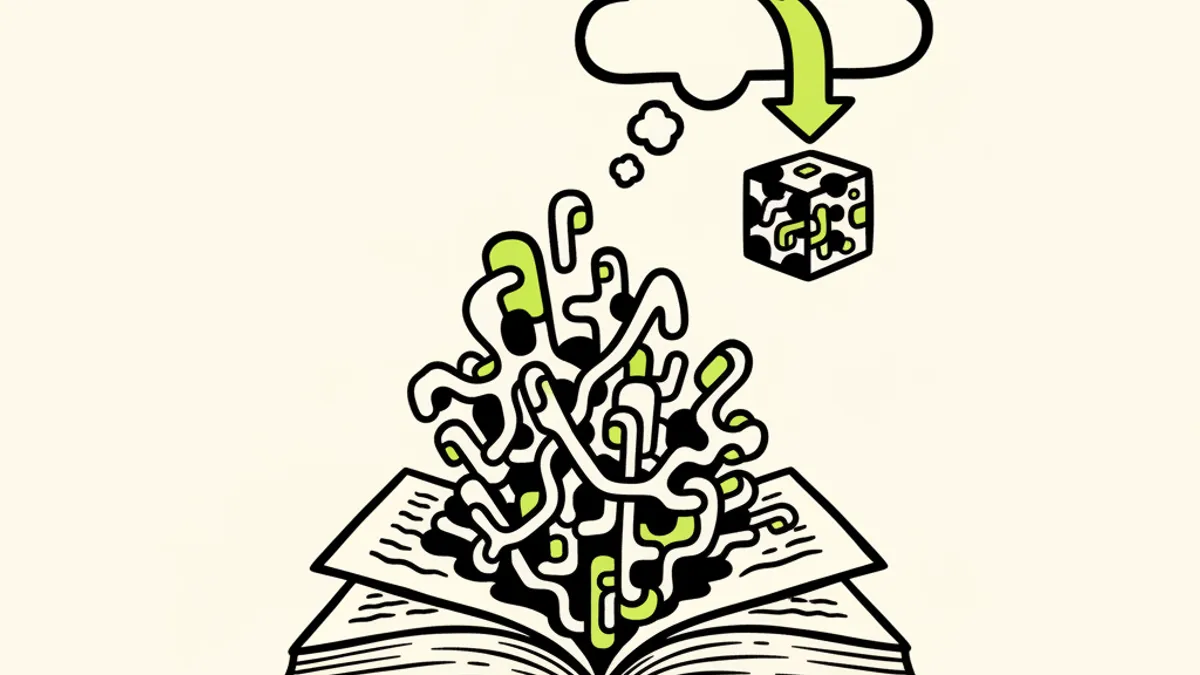
Founders often spend weeks refining landing page copy to sound visionary. Then a potential customer opens Perplexity and types "best local supply chain software in Chicago." The AI ignores your poetic vision statement entirely. Instead, it pulls a blunt, factual sentence from a competitor's pricing page and cites them as the top authority. If you want to know how to get cited by perplexity or Gemini, you have to stop writing for human emotion first and start writing for machine extraction. The transition from traditional search engines to conversational interfaces has fundamentally changed how information is parsed. This guide breaks down exactly how to format your site to capture these new citations.
how real-time search extraction works inside conversational interfaces
Generative engines do not read your website the way a human does. When a user asks a question, the engine runs a rapid background search, pulls the top ten or twenty snippets of text, and feeds those raw strings into the language model. The model then synthesizes an answer based strictly on those text blocks. If your website text is buried inside a dynamic JavaScript accordion or split across five disjointed sentences, the extraction script simply skips it. We see this constantly when founders ask what to do when ChatGPT recommends your business competitors. The competitor is not necessarily better. The competitor just formatted their data in a way the extraction script could instantly parse.
Generative engine optimization strategies require you to think about text as a database row. The search engine needs a subject, a predicate, and a concrete fact right next to each other. If a user queries Gemini about inventory management tools for hardware stores, Gemini looks for a sentence that says "Our software manages inventory for hardware stores." It does not look for "Empowering retail spaces with next-generation stock fluidity." You have to bridge the gap between how ai engines pull source data and how you present your value proposition. This means prioritizing literal descriptions over marketing concepts. The machine does not care about your brand voice. It cares about entity resolution and factual certainty.
structuring factual statements to meet retrieval-augmented generation standards
Retrieval-augmented generation relies on semantic density. This means packing the maximum amount of factual information into the shortest possible string of text. To rank in ai search engines, your core claims must be self-contained. A language model looking at a snippet does not have the context of your entire homepage. If your hero section says "We help you scale," and three scrolls later a footer mentions "plumbing logistics software," the model will never connect the two. You need to combine them into one unit. "We provide plumbing logistics software that helps contractors scale operations." This is a complete, extractable fact.
When we configure Dexi to handle visibility for our clients, we rewrite their core service descriptions into these dense, standalone factual units. Every paragraph should begin with a clear, declarative sentence that requires no outside context to understand. Think about how an encyclopedia is written. You state the entity, you state what it does, and you state the quantitative boundaries of its service. For example, instead of saying "We serve the tri-state area with fast delivery," you write "Our commercial bakery delivers wholesale sourdough to cafes across New York, New Jersey, and Connecticut within 24 hours."
The second version gives the AI specific geographic entities, specific product categories, and a specific time metric. It is impossible for the model to misinterpret. Structuring your text this way also makes it much easier to compile machine-readable documentation, which is why we advise founders to learn how to format an llms.txt file for your business website.
avoiding complex paragraph structures that break model attention spans
Language models have a limited attention span for complex syntax. If you write a paragraph filled with dependent clauses, passive voice, and parenthetical asides, the model struggles to assign certainty to the statements. It will skip your convoluted paragraph and cite a simpler one from another domain. You must write in active voice with a linear progression of ideas. Subject, verb, object. Do not bury the main point at the end of a long introductory narrative.
If you are explaining your pricing model, say "The Starter plan costs $5,000 per month and includes two user licenses." Do not say "For those looking to dip their toes into the waters of automation, our Starter tier, which we introduced last year, is available for just $5,000 monthly." The extra words dilute the semantic weight of the core facts. We have seen business owners lose out on direct Perplexity citations simply because they used too many adjectives. The extraction process favors high information density.
When you read your website copy, look for sentences that span more than three lines on a desktop monitor. Break them apart. Ensure that pronouns like "it" or "they" are used sparingly. If you start a new sentence, restate the noun. Instead of "It integrates with Stripe," write "The billing portal integrates with Stripe." This repetition might feel slightly rigid to a human editor, but it guarantees that if the AI only pulls that single sentence, the context remains entirely intact.
Furthermore, when Perplexity evaluates a snippet, it calculates the distance between the user's query terms and your text. If the user asks about "Stripe integration for billing portals," having those exact words in a single, tight sentence drastically increases your relevance score. If "Stripe" is in paragraph one and "billing portal" is in paragraph four, the semantic distance is too large. The extraction script assumes the two concepts are unrelated. Keep related entities physically close together on the page.
using unique product data points to become an unambiguous source authority
The most reliable way to force an AI to cite you is to publish data that exists nowhere else on the internet. Language models are trained to seek out primary sources for specific claims. If you publish a generic list of tips, you are competing with ten thousand other websites saying the exact same thing. The model will likely cite a high-authority domain like Forbes or Wikipedia. However, if you publish proprietary data from your own operations, you become the sole source of truth for that specific information.
For a small business, this means sharing concrete operational metrics. Instead of writing "We have a lot of experience fixing HVAC systems," write "We have repaired 412 Carrier HVAC units in downtown Seattle since 2022." When a user asks an AI about Carrier HVAC repair experience in Seattle, your specific number acts as a magnet for the retrieval system. The AI loves precise numbers because they look authoritative in a generated response.
We encourage founders to mine their internal databases for these unique points. Look at your customer service logs, your inventory turnover rates, or your delivery times. Package these numbers into clear, factual statements on your website. If you run a local coffee roastery, state exactly how many pounds of Ethiopian Yirgacheffe you roasted last November. State the exact temperature you use for your espresso extraction.
When you provide highly specific, numerical data points, you transition from being a generic vendor to being an unambiguous source authority. The generative engine will pull your data to substantiate its answers, and it will append a citation link directly to your domain. This strategy requires zero technical backend work. It only requires you to stop hiding your actual operational data behind vague marketing copy. Read our blog for more insights on leveraging your internal data across different channels.
verifying reference citation anchors across varying chat prompts
Once you have structured your text and published your unique data, you must test how different generative engines interpret your pages. You cannot rely on traditional keyword rank trackers anymore. You have to open Perplexity, Gemini, and ChatGPT, and actively prompt them to see if your citations appear. Start with broad industry queries and slowly narrow down to your specific niche.
Pay attention to the exact phrases the AI uses when it links to your site. These are your reference citation anchors. If the AI consistently cites your page for a specific term, you know your text structure is working for that concept. If it ignores you, you need to revisit the page and make the factual statements even more explicit.
Testing requires varied prompt engineering. Do not just ask "Who is the best plumber in Austin?" Ask "Which Austin plumber specializes in tankless water heater installation for historic homes?" Ask "What are the typical costs for commercial pipe repair in downtown Austin according to local contractors?" By altering the constraints, the geography, and the intent of the prompts, you map out the boundaries of your current generative engine optimization.
You will quickly discover which paragraphs on your site are acting as strong retrieval anchors and which ones are being ignored. Keep a log of the successful extractions. Notice the sentence structures that work. You will likely find that the most boring, direct, and factual sentences are the ones generating all your AI referral traffic. Optimize the rest of your site to match that exact cadence. The landscape of search is shifting away from ten blue links and toward synthesized answers. Your goal is to be the foundational material those answers are built upon.
---
Managing your visibility across these rapidly changing AI search engines requires constant monitoring and adjustment. Dexi, our visibility AI, automates this entire process by continuously optimizing your company assets for generative extraction. If you are ready to stop guessing and start dominating AI citations, learn more about Dexi on her dedicated page or book a call to discuss how we can integrate an AI hire into your operations.