Handling midnight customer DMs for hospitality and restaurant brands
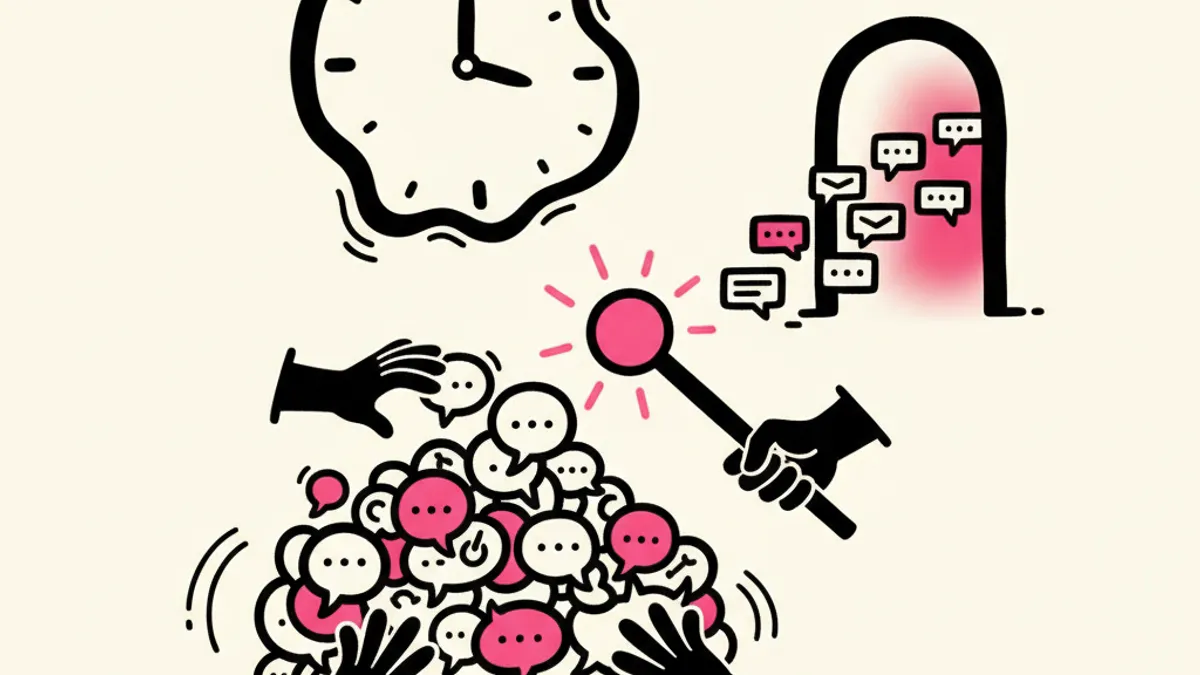
It is 11pm on a Thursday. The kitchen has been closed for an hour. The lights are off, the floor staff have gone home, and somewhere on a phone that nobody is watching, three Instagram DMs are stacking up. "Do you do gluten-free sourdough?" "Hi, table for six on Saturday?" "Are you the place from the TikTok with the matcha hojicha?" By Friday morning, two of those three have already booked somewhere else. The third has unfollowed.
That is not a customer-service problem. That is a revenue problem. And it is the single most common operational leak we see in hospitality businesses we work with.
the true cost of unread Instagram direct messages in the hospitality trade
Most owner-operators we talk to underestimate how much late-night DM volume their venue is generating. They check Instagram at 9am, see seven unread messages, reply to three, and lose the rest by noon. The replied-to three feel like the whole picture. The unread four were the actual covers.
In a London brunch group we looked at, late-night DMs (sent between 9pm and 2am) represented about 38 percent of all booking-intent inquiries on Instagram. Of those, 71 percent got no reply within two hours. Of those, roughly half went on to book a competitor. That is a measurable, recurring, weekly tax on revenue, and it is invisible because the lost covers never make it into the POS.
The cost is not just the immediate booking. A guest who messages a venue and gets ignored stops following within three weeks at twice the rate of a guest who got a response, even a slow one. So you are also losing the audience that would have heard about your next pop-up, your new menu, your re-opening after the August break.
mapping regular guest queries from booking links to dietary needs
Before you automate anything, classify what you are actually receiving. Spend one evening (or have a manager spend it) reading the last 200 DMs and tagging them. You will find that 80 percent fall into five or six buckets:
1. Booking inquiries ("table for 4 Sunday brunch")
2. Hours and openings ("are you open Monday bank holiday?")
3. Dietary questions ("do you have a vegan option?", "is this gluten-free?")
4. Location and parking ("where exactly are you?", "is there a car park nearby?")
5. Menu specifics ("do you still do the burrata?")
6. Press, partnerships, suppliers (the bucket you actually want a human to answer)
Each of these has a deterministic answer in your business, but the answer is stored in a different place. Bookings live in your reservation tool. Hours live on Google Business Profile. Dietary information lives in the head of your head chef. The reason your DM inbox feels chaotic is not that guests are unreasonable, it is that the answers are scattered across systems no one tool can see at once.
how to connect social platforms to reservation management software engines
The hospitality CS tools of three years ago could only do canned replies, which solved nothing because the canned reply for "table for 4 Sunday?" is still "let me check," and now you have just made the guest wait and trained them to expect a human.
What works in 2026 is a thin layer that reads a DM, classifies it, and either answers it from a structured source of truth or hands the conversation to a person who can. For bookings specifically, the layer needs read-write access to the reservation system, OpenTable, ResDiary, SevenRooms, the platform you already use. For hours, it pulls from Google Business Profile. For menu and dietary, it reads a single document you maintain (a single markdown file with allergens and substitutions works fine).
The setup pattern we use for venues:
- One JSON describing the venue (hours, address, parking note, neighbouring tube)
- One markdown describing the menu and dietary substitutions
- An API token for the reservation system, scoped to read availability and create bookings
- A handoff rule for press, partnerships, complaints, anything containing the word "ill" or "allergy reaction"
That is the whole architecture. The DMs the system can answer, it answers in under two minutes. The DMs that need a human are flagged with a one-line summary so the manager opens the inbox in the morning and the press request is at the top, not buried under twelve "are you open Sunday?" messages.
setting up intelligent logic loops for variable weekend availability
The trap most "AI customer service" tools fall into is treating availability as a static fact. It is not. Saturday lunch availability at 1pm changes minute-by-minute as walk-ins seat, parties run long, no-shows free up tables. A booking confirmation that promises a 7pm table when the system says yes and a 7pm table when reality says no will burn trust faster than any silence.
The fix is not to make the layer "smarter," it is to make it honest about uncertainty. The pattern we recommend:
- For inquiries inside the reservation system's hold window (typically 30-90 minutes for hospitality venues), the layer can commit to a table and confirm.
- For inquiries further out, the layer offers a tentative slot and asks the guest to confirm with one tap. The system holds the table for 10 minutes pending response.
- For inquiries about peak windows (Saturday 12pm-3pm in most brunch venues), the layer waitlists and tells the guest exactly where in the queue they are.
This is more guest-friendly than the typical human flow, which is "let me check and get back to you" followed by silence for three hours.
keeping the hospitality brand tone intact without manual text input
The single biggest objection we hear from owner-operators is "but the way I reply is part of the brand." It is, and they are right to protect it. The fix is to teach the layer the brand voice once, then enforce it across every message.
We do this with a short prompt that says, in plain English:
- Address the guest by first name if known
- Keep replies to under three sentences for ordinary inquiries
- Use the venue's nickname (e.g., "the Sunday lot") rather than corporate phrasing
- Never apologise pre-emptively for things that did not happen
- Never offer a discount unless the manager has explicitly authorised the campaign
The same prompt holds for English replies and any other language the venue trades in. For a multi-site group, each site can override two or three lines without rewriting the whole prompt.
What we typically see after rollout: average response time drops from 4 hours to under 90 seconds, late-night booking conversion roughly doubles, and the manager's morning is freed to deal with the things that actually need a person, like the supplier who emailed at midnight with a price change.
---
If your week looks like the one above, Iris is what we use for this. She is the customer-service hire we built into our own businesses first, then made available. Book a 30-minute call, the first two weeks are free, and if Iris is not a fit for your venue we will tell you on the call.